


Fungal foot infections occur through contact with sick people or animals and through contact with soil, water, or plants.It is important to recognize and treat the disease promptly.
There are different types of foot fungus, and only a doctor can correctly identify the type through a series of tests.Afterwards, the specialist will prescribe a course of treatment that will allow you to quickly deal with the disease.
interfinger form
This form of the disease is considered the most common.It is usually activated during the summer.The development of the disease begins with skin lesions of the feet between the third and fourth and between the fourth and fifth toes, and then gradually spreads to all folds.The main symptoms of this fungus are:
- Cracks appear in the skin;
- The appearance of a white edge indicates the sloughing of the upper layer of skin;
- Weeping wounds appear;
- burning and itching sensations;
- Erosion forms at cracks;
- As the disease progresses, the skin relaxes and destroys its protective function.
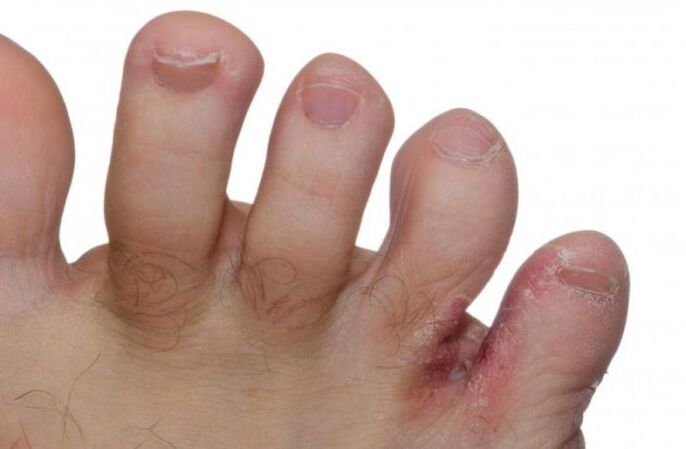
Most often, interdigital morphology occurs against a background of squamous morphology.This disease can be treated with ointments.In the initial stages, you can do without the tablet.
An experienced specialist can tell you what fungus is and choose an effective treatment for your feet.Antifungal medications will relieve the disease within one to three weeks.The most important thing is not to forget to apply the prescribed medicine to your feet twice a day.
The disease has a chronic course.It is not easy to determine in the early stages.Therefore, patients often go to the doctor when this disease occurs in all the folds between the fingers.In this case, treatment may take longer.
Squamous form of hyperkeratosis
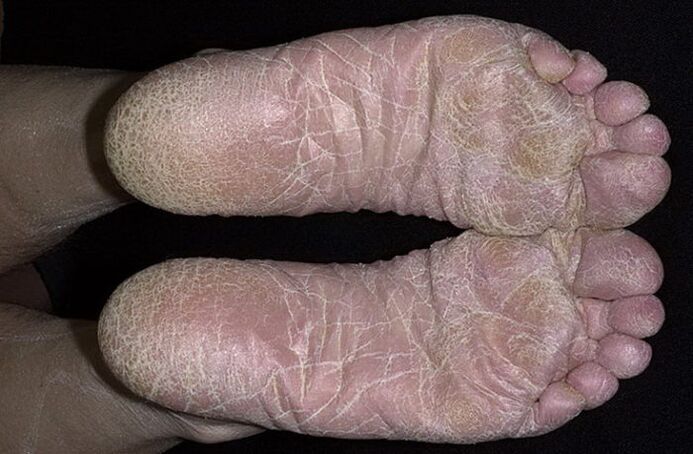
In most cases, the disease affects one foot and, without proper treatment, can spread to the other foot.In this disease, the skin undergoes fundamental changes.Keratinocytes completely cover the foot.The skin on your feet becomes rough and then cracks.Heels are also prone to cracking when you have hyperketosis.The appearance of erosions is accompanied by burning sensation and itching.The patient will feel pain.
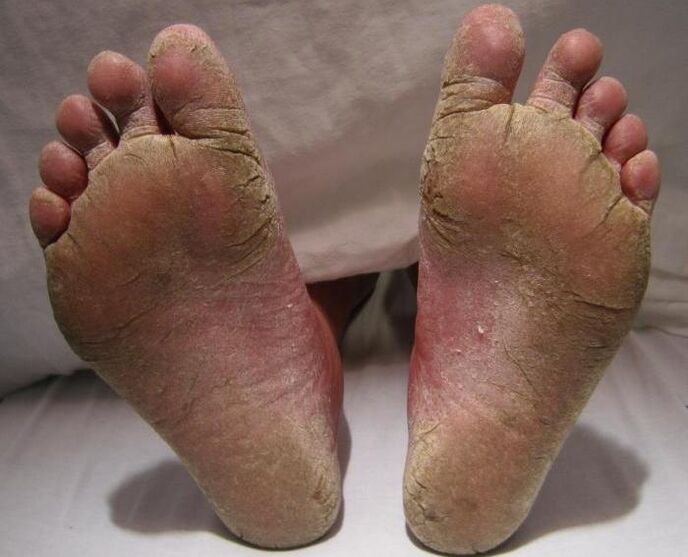
The main symptoms of the squamous form of hyperkeratosis are:
- redness of skin;
- Itching, peeling;
- Keratinocyte proliferation;
- Rough calluses appear, including on the heels.
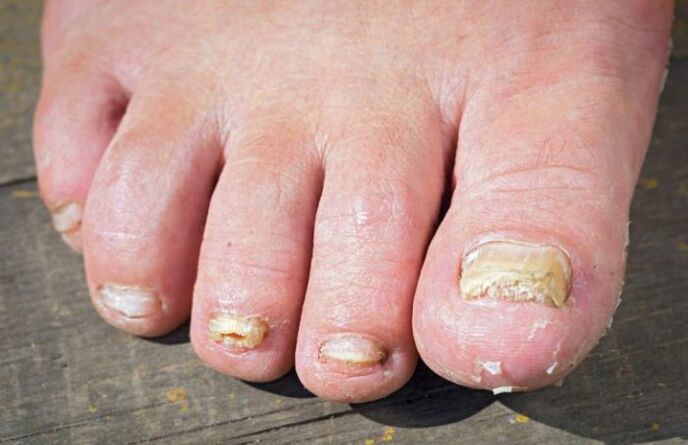
This disease can also affect the nail plate.Over time, it loses transparency, changes color and shape.In the advanced stages, the nails often begin to chip.Treating this stage of the disease is not easy.In this case, your doctor may prescribe a course of pills in addition to topical treatments.Combination drugs are mainly used for treatment.The duration of the course is determined by experts.Medications are selected based on the type of foot fungus the patient is exposed to.
dyshidrosis type
This form is also called vesicular.This is extremely rare.The disease is accompanied by the appearance of small-diameter blisters or bubbles.They are solitary at first, but gradually grow and explode.Ulcers later form.This disease is not easy to treat.This is complicated by the ease with which viruses and bacteria can enter the body through cracks and erosion.Often, eczema, lymphadenitis, and other conditions with similar symptoms occur at the same time as fungi.
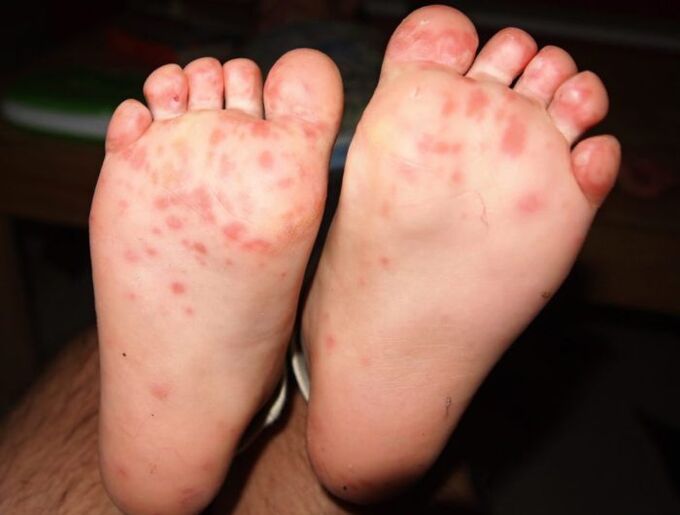
You should consult a specialist if you notice the following signs of illness:
- Pain and itching in the affected area of the foot;
- Erosion and cracks occur;
- Severe peeling of the skin on the feet;
- Blisters or blisters appear on the skin.
Often, without proper treatment, the disease takes a bacterial form.In this case, the clear contents of the vesicles become purulent and cloudy.The patient developed severe headache and elevated body temperature.Treatment of this disease involves complex treatments.The doctor prescribed topical antifungals and tablets.
erase form
This type of disease was not immediately recognized.In fact, the symptoms of this form are eliminated and do not actually bother the patient.The eradicated fungus will be accompanied by floury flaking of the skin.The feet seemed to be covered in fine flour.Tiny cracks appear between the toes, barely visible to the naked eye.Patients may experience mild itching.No redness.
This disease is difficult to treat.Because only if the eradicated form develops into onychomycosis, the patient will seek qualified help.Valuable time is wasted and recovery may take a long time.
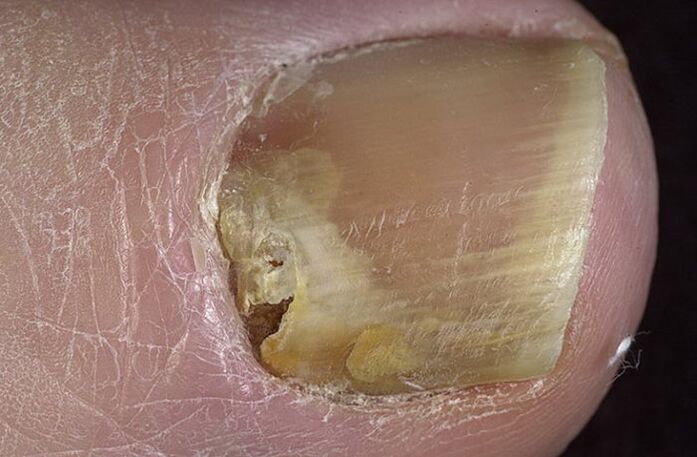
Onychomycosis
In this case, we are referring to the disease that accompanies fungal infection of the nail plate.There are many types of this disease:
- Damage caused by mold;
- hypertrophic type;
- shriveled.
In the first case, the disease occurs against the background of other nail lesions.The nail plate often changes color, turning black, green, or brown.Inflammation of the nail bed.
In the hypertrophic form of the disease, the plates turn yellow and become thicker.The nails break easily, exposing thickened flakes of skin.
With atrophic onychomycosis, the skin under the nails becomes rough and the nail plate becomes thinner.If treatment is not started promptly, this disease can completely destroy the nail plate and nail bed.
Rhodophyceae
This disease is also called erythromycosis.It is characterized by dry, flaky skin and blood vessels.The disease develops gradually and has few symptoms.Therefore, the wearer will not notice it immediately.Burning and itching may occur only in the later stages.Symptoms of this stage are as follows:
- appearance of blisters and bubbles;
- Patches spread all over soles;
- Pain when walking, appearing as the number of blisters increases.
Specialists can prescribe treatment only after conducting a series of examinations and studying the clinical situation.Through microscopic examination, we can determine the type of fungus and how the foot became infected.Treat with an exfoliating (keratolytic) agent.A specialist may prescribe an ointment or cream containing salicylic acid.The course also includes the use of antifungal medications.In advanced cases, tablets are used in addition to treatment.If you need to eliminate damage to the nail plate, you need to use a special formula.
Candidiasis of the feet
This disease is quite rare.The fungus Candida, which causes the disease, is present in everyone's body and is considered conditionally pathogenic.If they actively reproduce, unpleasant consequences may occur.The development of pathogenic fungi is often associated with a decrease in immunity, which occurs against the background of frequent stress and overexertion of the body.Occupational or domestic injuries or frequent wearing of closed shoes during the summer may contribute to the development of the condition.
Symptoms of candidiasis:
- Hyperemia (overflow of blood vessels);
- The layers of skin separate from each other;
- Itching, peeling;
- Small, flat blisters appear on the feet;
- Significant swelling.
Medications are prescribed individually depending on the stage of the disease.Generally, this is a complex therapy that includes local and systemic medications.
It’s important to take precautions to avoid developing one of these fungi.They are very simple:
- Don’t use other people’s shoes;
- Use only sterile tools for pedicures and manicures;
- Choose comfortable shoes that allow your skin to "breathe."
Preventing this disease is not difficult by following these simple rules.